

Summary
Ready to turn a new skill into a rewarding career? Discover how to become a qualified plumber in the UK, which qualifications you need and the career opportunities waiting for you. The Workery's Plumbing Course offers an adult-friendly blended route, with 300 hours of content across 14 modules.
Flexible learning: Study online, on mobile, desktop or tablet, at the pace that suits your schedule, with 100+ instructional videos.
Expert support: A coach and a technical expert are on hand, led by Stuart, a lecturer with over 20 years of experience, plus an active community of learners and live masterclasses.
Qualifications: Earn the certificate and take the next step towards NVQ Level qualifications to become a qualified plumber.
Career path: options include team leader, supervisor, services engineering, renewable heating or running your own business.
Cost: The Workery's Plumbing Course costs £1,690, with interest-free financing available.
Read on for the full guide to skills, training routes, pay and progression.
Thinking about a hands-on trade with real job security? This career guide walks you through what a plumber actually does, the skills and training routes you'll need, how much you can earn, and where the job can take you over time. Whether you're starting from scratch or switching careers, these insights will help you understand the plumbing trade before you commit to training.
What Does a Plumber Do? Understanding the Day-to-Day Work
A plumber installs, repairs and maintains water, heating and drainage systems. Depending on the job, you could work at a client's home, at a client's business, or on a construction site, often in cramped spaces, at height, or outdoors. Tasks typically include cutting, shaping and joining pipes, fitting sanitary appliances, servicing boilers and radiators, and responding to emergency call-outs such as a burst pipe or a blocked drain.
A typical day for a professional in this field involves a mix of planned maintenance and reactive problem-solving. You might start your morning installing a new central heating system in a residential property and end it fixing a complex leak in a commercial water supply. Because the UK faces a significant skills shortage, good plumbers are rarely without work, providing a level of financial stability that few other trades can match.
Plumbing Career Progression: From Trainee to Leadership
Most plumbers start out as a trainee or apprentice, assisting qualified professionals on site to learn the foundational reflexes of the trade. At this stage, you learn to cut and prepare pipework, follow basic safety rules, and get used to the pace of a working site. These early months are essential to build the practical skills you'll rely on throughout your career.
Once qualified, the role expands into a domestic and site plumber, where you will be responsible for installing bathrooms, kitchens, boilers and central heating circuits in new builds or renovation projects. This role calls for precision, autonomy and a solid grasp of technical standards, while adapting to the constraints of each site. Many experienced plumbers also choose to become a plumbing and heating technician, developing a dual skillset to install and maintain boilers and underfloor heating while optimising energy performance; a role increasingly in demand as the UK shifts towards low-carbon heating solutions.
With significant experience, a plumber can move into a team leader or supervisor role. In this position, you are responsible for coordinating the work, organising interventions, managing materials and ensuring safety and quality on site. This role acts as the vital link between technical teams and the wider project management, requiring excellent communication and organizational skills alongside technical expertise.
Alternatively, many professionals choose the path of a self-employed plumber, running their own business and managing quotes, clients, supplies and schedules directly. This route offers the most independence but requires business management skills in addition to technical proficiency. Training with The Workery can be a solid starting point for building the technical foundation this independence relies on, providing the confidence needed to transition from an employee to a business owner.
How to Become a Plumber: Skills and Entry Routes
What Qualifications Do You Need to Be a Plumber?
To become a qualified plumber in the UK, you typically need to achieve an NVQ Level 2 or Level 3 in Plumbing and Domestic Heating. These qualifications ensure you have reached a high standard of competence in both theoretical knowledge and practical work. If you are coming from school, you usually need GCSEs (grades 9 to 4 or A* to C) in English and Maths to secure an apprenticeship. For adult learners, intensive plumbing courses or fast-track training providers offer a way to gain these certifications without returning to full-time education for several years.
How to Train as a Plumber via Apprenticeships?
A plumbing apprenticeship is one of the most traditional and respected routes into the industry. It allows you to earn a plumbing apprenticeship salary while you learn, combining on-the-job experience with one day a week at a college or training centre. Most apprenticeships last between two to four years, depending on whether you are aiming for Level 2 or Level 3. This route is excellent for building a portfolio of evidence and gaining job security early in your career.
For school leavers, an apprenticeship provides a structured environment where an employer mentors you through the daily realities of the trade. You will learn to handle tools, understand building regulations, and develop the problem-solving mindset required to diagnose faults in complex pipework.
Fast-Track Plumbing Courses and Adult Learning
If you are looking at becoming a plumber at 40 or switching careers later in life, an accredited fast-track plumbing course might be the best option. These programs, often provided by specialists like Able Skills, allow learners to gain foundational skills in a shorter timeframe. While an intensive plumbing course cost can be an upfront investment, it enables you to start working as a plumber’s mate much faster. From there, you can work towards your NVQ Level 2 while gaining real-world experience.
Gaining Gas Safe Registration and Specialized Skills
To work on central heating systems and gas appliances, you must be on the Gas Safe Registration list. This is a legal requirement in the UK and significantly boosts a plumber's earning potential. Many qualified plumbers choose to add this to their skillset after completing their initial plumbing training. Additionally, with the shift toward green energy, learning to install air-source heat pumps is becoming a valuable part of modern plumbing certification.
Kickstart your plumbing career with The Workery
Ready to turn your skills into a rewarding new career? The Workery offers a 100% online Plumbing Course, leading to a City & Guilds Assured Diploma in Plumbing, for just £1,690 !
300 hours to master the trade: 14 modules and 20+ videos packed with practical techniques
Expert support every step of the way: get a personalised feedback, live masterclasses and guidance from a plumbing expert
Learn at your pace: train anytime with flexible online learning that fits around your life.
Build skills that open doors: put your knowledge into practice, track your progress and earn a City & Guilds Assured Diploma in Plumbing.
Your future is in your hands!
Career Path and Progression: Where Can It Take You?
The plumber career path doesn't stop at qualification. With experience, a plumber can move into services engineering for construction or specialise in renewable heating technologies. Others become a master plumber or choose to train the next generation of students in a further education college. Starting with a solid, practice-based training such as the Plumbing Course from The Workery gives you the technical grounding to explore any of these directions later on.
Plumbing Salary UK: What Can You Earn?
How much do plumbers earn in the UK?
Pay in the plumbing trade varies with experience, specialisation, and location. In 2026, the average salary for a plumber in the UK typically ranges from £24,000 for a starter to over £46,000 for experienced plumbers.
Pay generally increases in stages as you gain experience. While a plumbing apprenticeship salary is lower during the training phase (often between £16,000 and £19,000), a newly qualified plumber can expect to see their pay rise quickly.
In major cities, particularly London, a plumber salary London can reach between £35,000 and £45,000 for employed roles. For those who are highly skilled, it is not uncommon to hear people ask "Can plumbers make £100k a year in the UK?" While this is at the very top end of the scale, it is achievable for a self-employed plumber salary where the individual runs a successful business with multiple contracts.
Specialisation is a major factor in financial stability and career growth. A gas plumber salary is typically higher than a "wet-only" plumber because of the additional risks and qualifications required. Furthermore, being a maintenance plumber for a large employer or working on commercial water supply systems often provides more consistent hours per week and benefits compared to domestic emergency call-out work.
Specialisation is a major factor in financial stability and career growth. A gas plumber salary is typically higher than a "wet-only" plumber because of the additional risks and qualifications required. Furthermore, being a maintenance plumber for a large employer or working on commercial water supply systems often provides more consistent hours per week and benefits compared to domestic emergency call-out work.
Working Conditions: On Site and in Clients' Homes
A plumber's working environment changes from one day to the next: a client's home for a repair, a client's business for maintenance, or a construction site for a full installation. The job can be physically demanding, sometimes in cramped spaces or at height, and the pace is often set by other trades working alongside the plumbing team. Good coordination and problem-solving are essential, particularly when you need to repair water leaks or systems under time pressure during an emergency call-out.
Train as a Plumber with The Workery
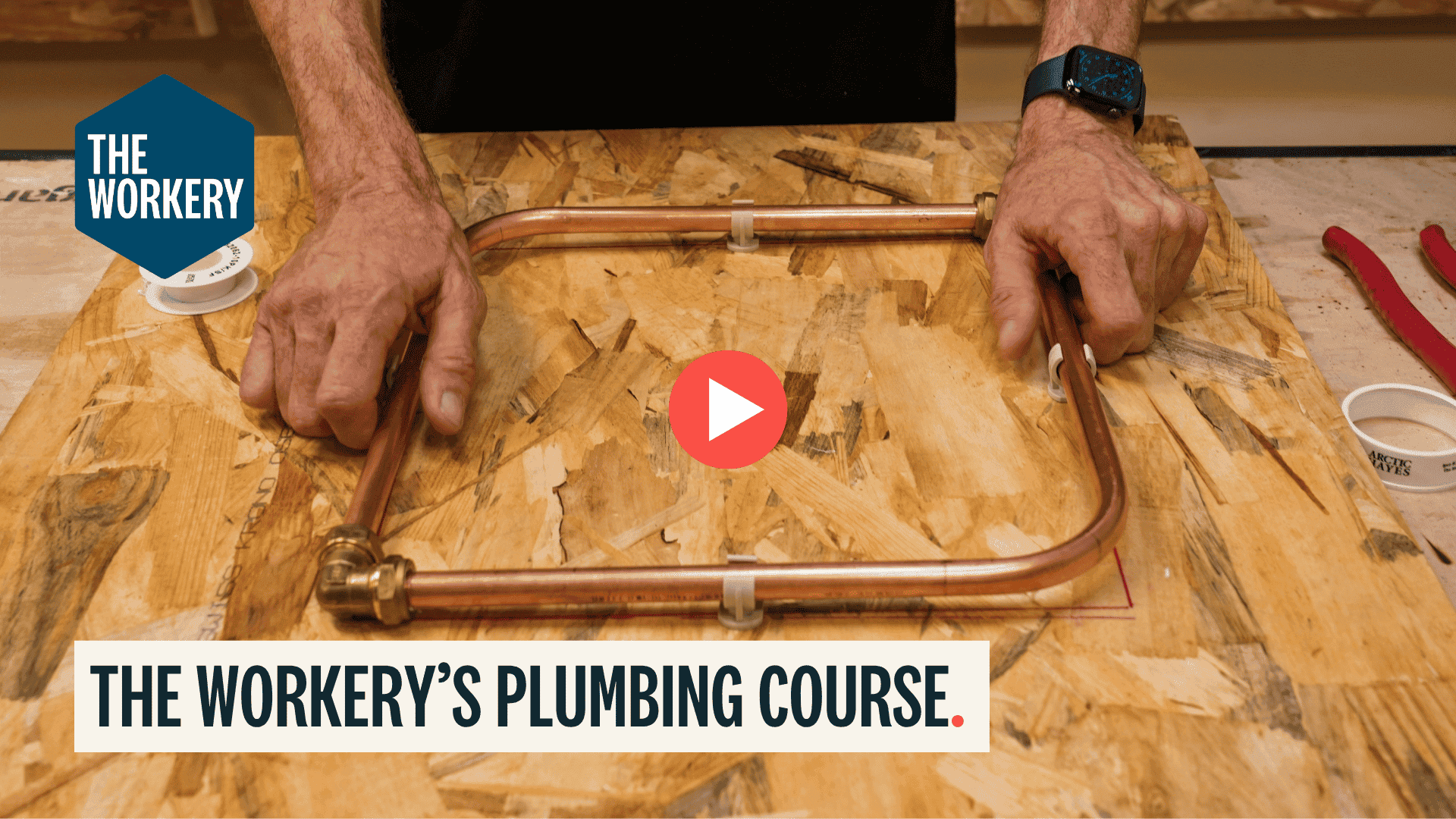
The Workery offers a UK Plumbing Course designed to get you fully work-ready. The course runs for 300 hours across 14 modules, covering foundations, tools and safety, hot and cold water systems, central heating systems, and sanitation. Training is delivered by Stuart, a Plumbing, Gas and Renewables Lecturer with over 20 years of industry experience.
The course is 100% online and self-paced, providing unlimited access to a library of content and technical masterclasses. On-going assessments track your progress, and a one-on-one review with your technical expert at the end of the course leads to a free Workery certification. The course costs £1,690, with financing plans available to help you manage the plumbing course cost.
Frequently Asked Questions
It depends on the route. A traditional plumbing apprenticeship Level 2 usually takes 2 to 3 years. However, an intensive plumbing course can provide foundational skills in weeks, allowing you to start working as a trainee while you complete your NVQ.
Costs vary significantly. A basic plumbing course might cost a few hundred pounds, while a comprehensive professional qualification program can range from £1,500 to £5,000. The Workery offers a professional route for £1,690 with interest-free instalments.
Yes, plumbing offers excellent job security and high demand. As long as buildings have water and heating systems, a skilled plumber will be needed for maintenance and emergency repairs.
Yes, you can take the vocational course route. By completing a Level 2 or Level 3 diploma at a college or through a private training provider, you can gain the necessary qualifications to enter the trade without a formal apprenticeship.
The duration varies by the level of plumbing training you choose. A basic plumbing course might last just a few weeks, whereas a full Level 2 or Level 3 qualification typically takes 1 to 2 years of part-time study. If you choose an intensive plumbing course, you could complete the classroom portion in 8 to 10 weeks.
Choosing to train as a plumber offers long-term financial stability, real day-to-day variety, and strong career progression across the UK. Whether you take the traditional route of an apprenticeship or opt for flexible adult vocational training, gaining recognised qualifications is the essential first step.
By choosing a flexible route like The Workery's Plumbing Course, you can gain the practical skills needed to earn your NVQ qualifications without putting your life on hold.
Take the first step today to build a sustainable, hands-on career where your expertise will remain essential for decades to come.