
Summary
You can retrain as a plumber in the UK through an apprenticeship, a blended course, a plumber's mate role or a college diploma, and age is not a barrier for career changers.
The Workery's Plumbing Course offers an adult-friendly blended route, with 300 hours of content across 14 modules.
Flexible learning: Study online, on mobile, desktop or tablet, at the pace that suits your schedule, with 100+ instructional videos.
Expert support: A coach and a technical expert are on hand, led by Stuart, a lecturer with over 20 years of experience, plus an active community of learners and live masterclasses.
Qualifications: Earn the certificate and take the next step towards NVQ Level qualifications to become a qualified plumber.
Cost: The Workery's Plumbing Course costs £1,690, with interest-free financing available.
Read on for a full breakdown of each training route, the skills you need and the career prospects.
Thinking about a career change? You are not alone. In 2026, the demand for skilled tradespeople in the United Kingdom has reached record highs. Whether you are looking to escape the office grind, seeking better job security, or wanting to increase your earning potential, choosing to retrain as a plumber is one of the most stable and rewarding moves you can make. With over 70,000 new recruits needed by 2032 to meet government housing and green energy targets, there has never been a better time to enter the trade.
Your 2026 Complete Career Change Guide
The UK construction and maintenance sector currently employs over 200,000 plumbing professionals, yet job vacancies continue to climb. This gap is driven by a combination of factors: an aging workforce reaching retirement, a surge in new housing developments, and the urgent national requirement to retrofit millions of homes with energy-efficient technologies. For a career changer, this translates to unprecedented job security and a strong bargaining position when it comes to rates and employment terms.
This guide provides a comprehensive roadmap for adult learners. We will cover the different training routes, the essential plumbers qualifications you need, realistic salary expectations, and how you can balance retraining with your current life commitments. We will also dive into the specialized niches, from gas engineering to renewable heat pumps, that allow you to significantly boost your income once you have mastered the basics.
What Does a Plumber Do? UK Job Description and Daily Work
Before you commit to a new career, it is vital to understand the plumber job description and what the day-to-day plumbing work actually entails. A plumber is responsible for installing, maintaining, and repairing water, heating, and drainage systems. This ranges from domestic housing to large-scale commercial properties like hospitals, schools, and office blocks.
On a typical day, you might find yourself:
Installing or repairing sanitation systems, including toilets, baths, and showers.
Fitting and maintaining domestic heating systems and pipework.
Responding to emergency call-outs for burst pipes or blocked drains.
Measuring, cutting, and bending copper or plastic piping using specialized jointing and bending techniques.
Using diagnostic tools to identify faults, pressure issues, or leaks within complex hidden systems.
Decommissioning old systems safely and in line with environmental regulations.
Beyond the technical tasks, being a successful plumber requires excellent customer service skills. You will often be the person homeowners turn to in a crisis, such as a flooded kitchen or a failed boiler in mid-winter. Being able to explain technical problems clearly to customers, provide accurate quotes, and maintain a professional discipline under pressure is essential. You aren't just a technician; you are a problem solver and a consultant for the homeowner's most vital infrastructure.
How to Become a Plumber in the UK: Choosing Your Training Route
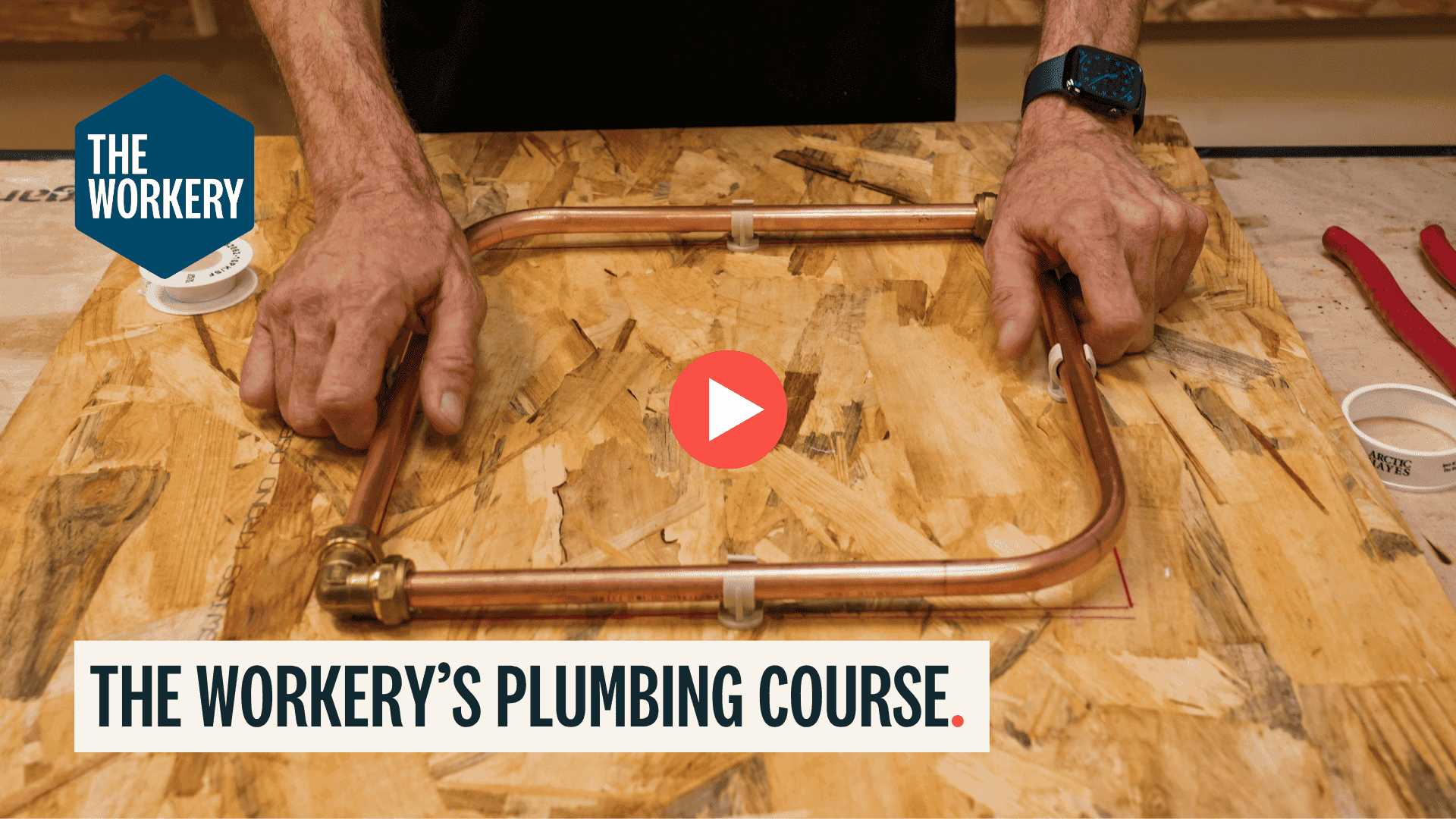
The Workery’s Plumbing Course (Fast-Track & Blended)
For career changers who cannot afford to spend four years on a low apprentice wage, The Workery's Plumbing Course is often the best way to enter the industry. This program is specifically designed for adult learners who need to balance retraining with existing commitments.
The course provides a comprehensive digital foundation with over 300 hours of content across 14 modules and more than 100 instructional videos. It follows a "blended learning" model, where you complete the theory and materials science online at your own pace. This is followed by intensive practical masterclasses and assessments led by technical experts like Stuart, a lecturer with over 20 years of experience in UK Further Education.
Priced at £1,690 with interest-free financing available, this route focuses on getting you the practical skills and knowledge needed to meet employer expectations. Upon completion, you receive a Workery certificate, and the program provides a clear pathway to gaining the NVQ Level qualifications required to work as a qualified plumber.
Traditional Plumbing Apprenticeship
A plumbing apprenticeship is the classic route, combining on-the-job training with college study. It usually takes 3 to 4 years. While it offers a "earn while you learn" model, places can be competitive. While historically geared toward school leavers, the UK government has introduced more incentives for "Adult Apprenticeships," allowing those over 25 to retrain while receiving a wage. The downside is the time commitment; it is a slow burn that requires a long-term financial plan.
Working as a Plumbers Mate
You can sometimes find plumbers mate jobs where you work as an assistant to an experienced plumber. This provides invaluable job experience and allows you to see the reality of the trade before committing to expensive courses. Many people use this as a stepping stone while completing their theory exams in the evenings. It is an excellent way to build a portfolio of work, which is a mandatory requirement for completing an NVQ.
College-Based Diplomas
Many local FE (Further Education) colleges offer Level 2 and Level 3 Diplomas in Plumbing and Heating. These are often classroom-heavy and may not include the on-site assessment required for a full NVQ. However, they are a solid starting point for those who prefer a structured, academic environment before moving into the practical side of the industry.
Become a plumber with The Workery
Ready to turn your skills into a rewarding new career? The Workery offers a 100% online Plumbing Course, leading to a City & Guilds Assured Diploma in Plumbing, for just £1,690 !
300 hours to master the trade: 14 modules and 20+ videos packed with practical techniques
Expert support every step of the way: get a personalised feedback, live masterclasses and guidance from a plumbing expert
Learn at your pace: train anytime with flexible online learning that fits around your life.
Build skills that open doors: put your knowledge into practice, track your progress and earn a City & Guilds Assured Diploma in Plumbing.
Your future is in your hands!
What Qualifications Do You Need to Be a Plumber?
To work legally and safely in the UK, you need recognized plumbers qualifications. The industry standard is the NVQ (National Vocational Qualification), which proves you have both the knowledge and the hands-on ability to do the job.
NVQ Level 2: The minimum requirement to be considered a qualified domestic plumber. It covers core skills such as pipework (copper and plastic), jointing, bending, drainage, and basic cold/hot water system installation.
NVQ Level 3: Required if you want to work on more complex systems, design heating layouts, or move into a maintenance plumber role in commercial or industrial settings. This level often includes the initial training for gas or renewables.
Gas Safe Registration: This is the "money maker." To work on boilers, cookers, or any gas appliance, you must complete the ACS (Approved Certification Scheme) and join the Gas Safe Register. Most plumbers find that their earning potential doubles once they add gas to their repertoire.
CSCS Card: If you plan to work on construction sites or for large contractors, you will need a Construction Skills Certification Scheme (CSCS) card. This is essentially a "passport" that proves you have passed a health and safety test and hold the relevant qualifications for your trade.
Is It Too Late to Retrain as a Plumber at 30, 40, or 50?
One of the most common questions on platforms like Reddit is: "Am I too old to become a plumber?" The answer is a resounding no. In fact, many training providers and employers actively seek out mature trainees and career changers. The industry is increasingly moving away from the "school leaver only" model, recognizing that adults bring a level of reliability and professional communication that is often missing in younger entrants.
The industry values the life experience and "soft skills" that older workers bring. Whether you want to retrain as a plumber at 30, 40, or even 50, your ability to manage time, handle complex people interactions, and demonstrate a strong work ethic are massive assets. Many successful tradespeople in the UK didn't pick up a wrench until their second or third career, transitioning from sectors like retail, the military, or office-based management.
Physically, while the job is active, it is more about technique and smart working than brute strength. Modern tools and materials, such as lightweight plastic piping and press-fit joints, have reduced the physical toll compared to decades ago. If you are reasonably fit and enjoy being on your feet and solving practical puzzles, age will not be a barrier to your success.
Advanced Topics and Specialisms in Modern Plumbing
Once you have qualified as a basic domestic plumber, the real career growth begins through specialisation. The industry in 2026 is far more technical than it was a decade ago, with a heavy focus on materials science and high-efficiency systems.
With the UK's push for Net Zero, the demand for Air Source Heat Pumps (ASHP) and Ground Source Heat Pumps (GSHP) is exploding. Transitioning into a Renewable Heating Specialist involves learning about low-temperature heating design and specialized pipework. This is currently one of the highest-paying niches in the trade, as the government offers significant subsidies to homeowners for these installations.
With the UK's push for Net Zero, the demand for Air Source Heat Pumps (ASHP) and Ground Source Heat Pumps (GSHP) is exploding. Transitioning into a Renewable Heating Specialist involves learning about low-temperature heating design and specialized pipework. This is currently one of the highest-paying niches in the trade, as the government offers significant subsidies to homeowners for these installations.
To install or service high-pressure hot water cylinders (which provide powerful showers without the need for pumps), you need a G3 Unvented Hot Water qualification. This is a short, specialized course that is essential for any plumber working on modern, high-end residential properties.
To install or service high-pressure hot water cylinders (which provide powerful showers without the need for pumps), you need a G3 Unvented Hot Water qualification. This is a short, specialized course that is essential for any plumber working on modern, high-end residential properties.
Understanding the legal requirements for water installations in the UK is vital. Completing a WRAS course allows you to join the "Approved Contractor" schemes, meaning you can self-certify your work to local water authorities, saving time and making you more attractive to both customers and contractors.
Understanding the legal requirements for water installations in the UK is vital. Completing a WRAS course allows you to join the "Approved Contractor" schemes, meaning you can self-certify your work to local water authorities, saving time and making you more attractive to both customers and contractors.
Advanced plumbing isn't just about installation; it's about diagnostics. Specializing in sanitation engineering involves managing large-scale drainage, waste-water treatment systems, and complex fault-finding in commercial environments. This requires a deep understanding of hydraulics and building regulations.
Advanced plumbing isn't just about installation; it's about diagnostics. Specializing in sanitation engineering involves managing large-scale drainage, waste-water treatment systems, and complex fault-finding in commercial environments. This requires a deep understanding of hydraulics and building regulations.
How Much Does It Cost to Become a Plumber in the UK?
The cost of retraining varies significantly based on the depth of the course and the speed of the qualification. A full-time college course might be funded if you are under 24 or meet specific low-income criteria, but most adult career changers invest in private training to accelerate their entry into the workforce.
The Workery's Plumbing Course , for example, is priced at £1,690. This represents a mid-range investment that provides a comprehensive digital foundation, including over 300 hours of content and 14 modules. Other intensive in-person "bootcamps" can range from £3,000 to £6,000, often including the cost of the NVQ assessment and initial toolkits. When calculating your budget, you should also factor in:
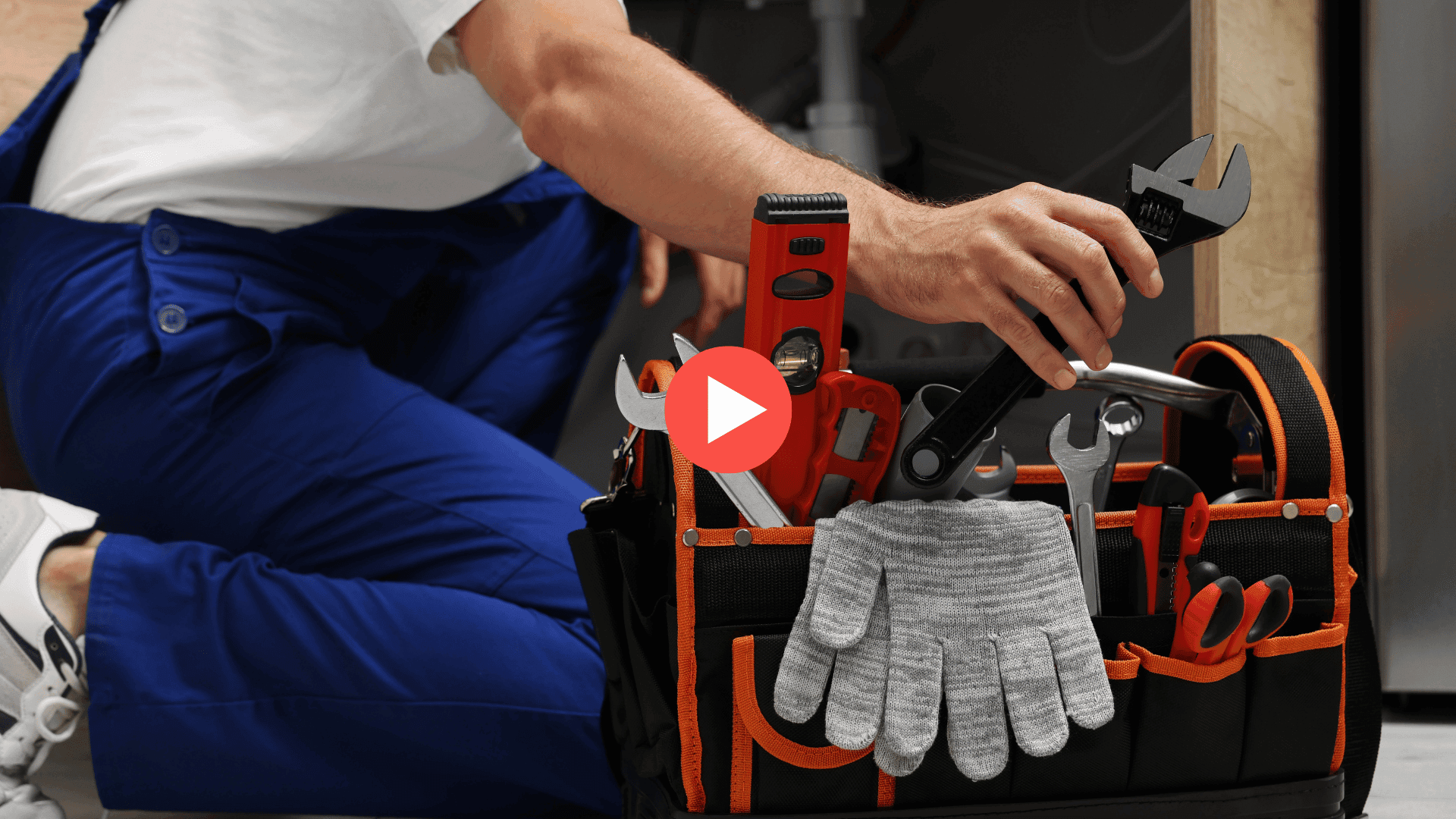
Tools and PPE: A basic starter kit (wrenches, cutters, blowtorch, safety gear) will cost between £300 and £600.
Assessment Fees: Some courses include these, while others charge separately for the final NVQ site visits.
Insurance: Once you start working, public liability insurance is a non-negotiable cost, usually starting around £150-£300 per year for a sole trader.
Many providers offer interest-free payment options or finance plans, allowing you to spread the cost of your training over 12 to 24 months, often coinciding with when you start earning your first trainee plumber wages.
Does It Make Sense to Retrain as a Plumber?
Given the high demand for trades in the UK, the answer is a definitive yes. We are currently seeing a "perfect storm" for the plumbing trade: an aging workforce is retiring just as the country needs to overhaul its entire domestic heating infrastructure. Plumbers are no longer just "fixing leaks"; they are the front-line engineers of the UK’s green revolution.
The potential for long-term job security is unmatched by many office-based roles that are increasingly vulnerable to automation and AI. Plumbing requires hands-on problem-solving, physical dexterity, and human interaction; skills that cannot be easily replaced. Whether you want a stable 9-to-5 with a local firm or the freedom to set your own day rate as a business owner, the plumbing trade offers a level of autonomy and financial upside that few other career changes can match in 2026.
The Future of the Trade: Plumbing in a Digital and Green World
As we look toward the 2030s, the plumbing industry is becoming increasingly digital. Modern heating systems often involve smart controls, integrated home automation, and remote diagnostic tools. This means that "new" plumbers who are tech-savvy will have a significant advantage.
Environmental awareness is also a major driver. Future plumbers will be expected to advise customers on water conservation technologies, greywater recycling, and the latest in energy-efficient appliances. By retraining now, you are positioning yourself at the start of a technological shift, ensuring that your skills remain relevant for the next 30 years.
Frequently Asked Questions
A traditional apprenticeship takes 3 to 4 years. However, for a career changer, intensive or blended plumbing courses can take anywhere from 6 months to a year. This usually involves a period of home study followed by practical workshops and then a few months of on-site work to complete your NVQ portfolio.
It requires a logical mind, basic arithmetic (for measuring and calculating flow rates), and manual dexterity. While the theory of water pressure and heating systems takes dedicated study, the most important factor is your willingness to engage in hands-on, physical work. If you enjoy seeing a tangible result at the end of the day, you will find the learning process rewarding.
Yes. Many adults qualify through private training providers by completing their NVQ diplomas and gaining job experience through work placements or starting as a trainee plumber in a junior role. The "portfolio" part of the NVQ can be completed while working for a company or even as a plumbers mate.
Not at all. The industry is facing a massive skills gap. As long as you are physically fit and motivated, your maturity and experience in dealing with people will make you a highly employable qualified plumber. Many homeowners actually prefer older tradespeople, perceiving them as more experienced and reliable.
Most start as a trainee plumber or in plumbers mate jobs. This allows you to learn the ropes under an experienced plumber while you work toward your final certifications. Maintenance roles with local authorities or housing associations are also excellent for beginners as they offer a wide variety of tasks and a steady, predictable workload.
You don't need to be a mathematician, but you do need "functional" maths. This includes calculating areas, volumes (for water tanks), and basic trigonometry for pipe angles. Most of this is taught during your plumbing course in a very practical, easy-to-understand way.
Retraining as a plumber offers unmatched job security, strong earning potential, and a clear escape from office-based routines. With a massive national skills shortage and the rise of green heating technologies, adult career changers of any age are in high demand.
By choosing a flexible route like The Workery's Plumbing Course, you can gain the practical skills needed to earn your NVQ qualifications without putting your life on hold.
Take the first step today to build a sustainable, hands-on career where your expertise will remain essential for decades to come.